
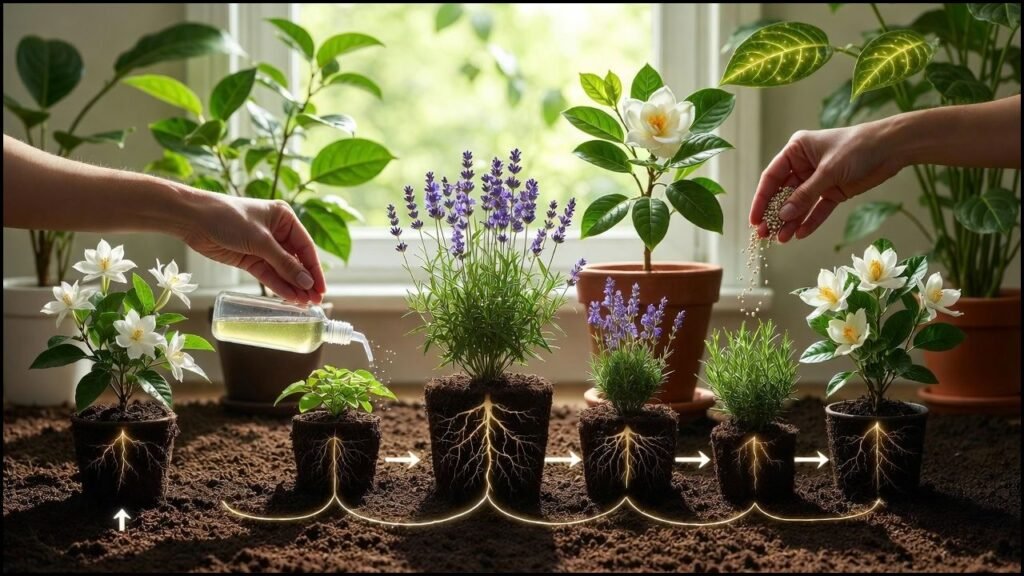
Fragrant indoor plants bring beauty, color, and delightful aromas to any home, but keeping them healthy all year round requires consistent care and attention. Unlike outdoor plants, indoor plants rely entirely on you for light, water, nutrients, and protection from pests. Without proper care, even the most resilient fragrant plants can struggle to bloom, produce aroma, or maintain vibrant foliage.
Year-round care is essential because the health of your plants directly affects their ability to flower and release their signature scents. Seasonal changes, such as shorter days in winter or warmer indoor temperatures in summer, can impact growth, water needs, and flowering cycles. Additionally, indoor conditions can vary from room to room, with differences in humidity, light, and airflow influencing how well plants thrive.
Proper care encompasses several key factors: providing adequate light, watering correctly, maintaining the right temperature and humidity, fertilizing appropriately, and monitoring for pests and diseases. Regular pruning, deadheading, and soil maintenance also help promote healthy growth and more abundant blooms. By observing your plants closely and adjusting care based on their needs, you can prevent stress, nutrient deficiencies, and pest problems, ensuring that your indoor garden remains strong and aromatic throughout the year.
This guide will walk you through the essential steps to keep your fragrant indoor plants healthy all year round. You’ll learn how to provide the right light and water, maintain optimal humidity, fertilize effectively, and protect your plants from pests and disease. With careful attention and consistent care, your indoor garden will flourish, filling your home with lush greenery and delightful fragrances no matter the season.
Providing Adequate Light
Light is one of the most critical factors for keeping fragrant indoor plants healthy all year round. It fuels photosynthesis, supports strong foliage, encourages blooming, and enhances the natural aroma of flowers and leaves. Without sufficient light, plants may become weak, leggy, or fail to bloom, which directly affects their fragrance.
Understanding Light Requirements
Different plants have different light needs. Flowering fragrant plants, such as jasmine or gardenia, often require bright, indirect light to produce abundant blooms. Aromatic foliage plants, like mint or lemon balm, thrive in moderate light but still need enough exposure to maintain strong, aromatic leaves. Understanding the specific requirements of your plants ensures they receive the energy necessary to thrive.
Adjusting Plant Placement Seasonally
Light levels inside your home can change with the seasons. During winter, when days are shorter and sunlight is weaker, you may need to move plants closer to windows or rotate them to ensure even exposure. In summer, avoid placing plants in direct, harsh sunlight that can scorch leaves and flowers.
Using Artificial Grow Lights
If natural light is insufficient, especially in north-facing rooms or during darker months, artificial grow lights can provide the spectrum and intensity plants need. LED or fluorescent grow lights can supplement sunlight, ensuring plants maintain strong growth, healthy leaves, and vibrant blooms year-round. Position lights 6–12 inches above plants and provide 12–16 hours of light daily, adjusting for plant type and light intensity.
By providing adequate light through proper placement and supplementation, you can support year-round growth, flowering, and fragrance for your indoor garden.
Proper Watering Techniques
Watering is essential for keeping fragrant indoor plants healthy and aromatic throughout the year. Both overwatering and underwatering can stress plants, leading to yellowing leaves, weak growth, fewer blooms, and diminished fragrance. Understanding how to water correctly ensures that your plants remain vibrant and thrive in any season.
Checking Soil Moisture
Before watering, always check the soil. Insert your finger about 1–2 inches into the soil: if it feels dry at this depth, it’s time to water. Moist soil helps roots absorb nutrients efficiently, while overly wet soil can cause root rot and attract pests like fungus gnats.
Seasonal Adjustments
Summer: Plants may need more frequent watering due to higher temperatures and faster evaporation. Monitor soil moisture regularly and adjust watering accordingly.
Winter: Cooler temperatures and lower light reduce water requirements. Overwatering during this period is a common mistake, so allow the soil to dry slightly between waterings.
Proper Watering Practices
Water slowly and evenly to ensure moisture reaches the root zone.
Use room-temperature water to avoid shocking the roots.
Ensure proper drainage by using pots with drainage holes and emptying excess water from saucers.
Avoid wetting flowers directly, as this can damage blooms and reduce fragrance.
Monitoring Your Plant
Observe your plant for signs of water stress: drooping leaves may indicate underwatering, while yellowing or soggy leaves suggest overwatering. Adjust your routine accordingly to maintain optimal hydration.
By mastering proper watering techniques and adjusting for seasonal needs, you can help your fragrant indoor plants grow strong, bloom consistently, and maintain their natural aroma all year round.
Maintaining Optimal Humidity and Temperature
Fragrant indoor plants thrive when humidity and temperature are kept within their ideal ranges. Proper environmental conditions not only support healthy growth but also enhance flowering and fragrance. Indoor conditions can vary widely with the seasons, so paying attention to humidity and temperature is essential for year-round plant health.
Ideal Humidity Levels
Tropical fragrant plants like gardenia and jasmine prefer higher humidity (50–70%).
Mediterranean plants such as lavender and rosemary tolerate lower humidity (30–50%) but still benefit from occasional moisture in dry environments.
Low humidity can cause dry, crispy leaves, while excessive humidity may encourage fungal growth or attract pests.
Tips for Increasing Indoor Humidity
Group plants together to create a microclimate.
Place plants on trays filled with water and pebbles, ensuring pots are above water level.
Use a humidifier in rooms with dry air, especially during winter.
Mist leaves lightly, but avoid over-saturating to prevent fungal issues.
Maintaining Proper Temperature
Keep indoor temperatures stable, avoiding sudden changes. Most fragrant indoor plants prefer 65–75°F (18–24°C) during the day and slightly cooler at night.
Avoid placing plants near heaters, air conditioners, or drafty windows, as extreme temperatures can stress plants and reduce flowering and fragrance.
Seasonal Adjustments
During summer, ensure plants are not exposed to excessive heat or direct sunlight, which can dry them out. In winter, protect plants from cold drafts and low indoor humidity to maintain vibrant foliage and aromatic blooms.
By maintaining optimal humidity and temperature, you create a stable environment that supports healthy growth, robust blooms, and strong fragrance for your indoor plants throughout the year.
Conclusion
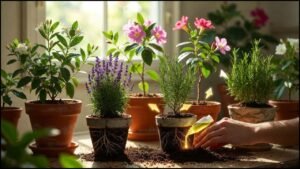
Keeping fragrant indoor plants healthy all year round requires consistent care, attention, and adaptation to seasonal changes. By providing adequate light, watering correctly, maintaining optimal humidity and temperature, fertilizing appropriately, and monitoring for pests and disease, you create an environment where your plants can thrive. Regular pruning, deadheading, and soil maintenance further support growth, encourage more blooms, and enhance natural fragrance.
Healthy indoor plants are more resilient, bloom more frequently, and release stronger aromas, filling your home with beauty and delightful scents throughout every season. Observing your plants closely, adjusting care based on their needs, and practicing preventive measures ensures they remain vibrant, aromatic, and strong year-round. With consistent care and attention, your indoor garden will flourish, offering greenery, flowers, and fragrance that can be enjoyed in every corner of your home.