
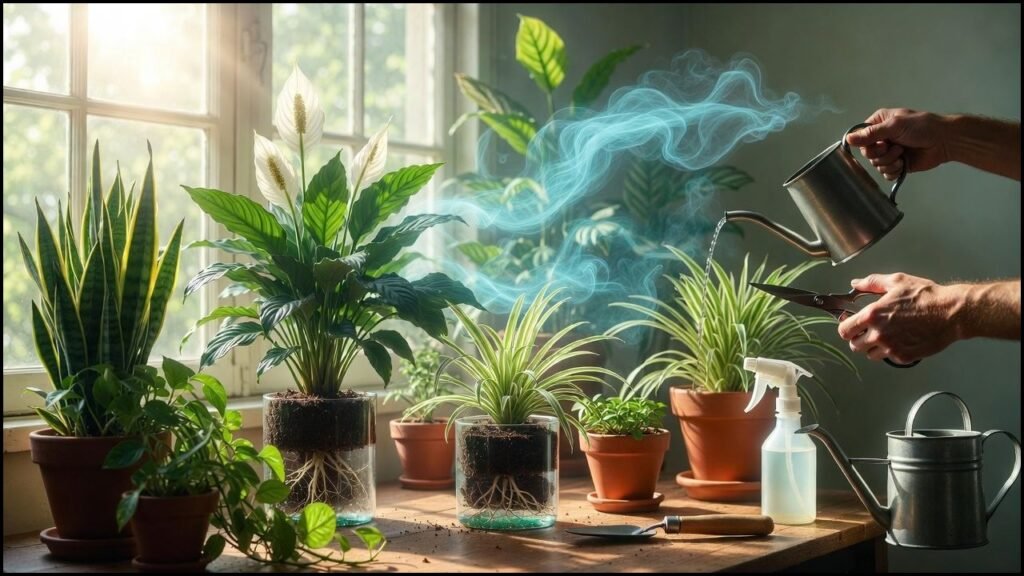
So you’ve bought a snake plant for the bedroom, a pothos for your desk, and a peace lily for the bathroom. Smart choices. But here’s something most plant guides don’t tell you: simply owning air purifying plants and actually getting the most out of them are two very different things.
A thriving, well-cared-for plant can absorb significantly more toxins, produce more oxygen, and regulate humidity far more effectively than a plant that’s merely surviving. The difference between a plant that’s struggling and one that’s flourishing isn’t just aesthetic — it’s biological. Every aspect of its health directly determines how hard it works on your behalf.
The good news is that maximizing the air-cleaning power of your houseplants doesn’t require expert knowledge or hours of maintenance. It requires understanding a few key principles and building a handful of simple habits into your routine.
This guide covers exactly that — practical, science-backed care advice specifically focused on getting the maximum air purification benefit from every plant in your home.
Why Plant Health Directly Affects Air Purification
Before getting into specific care tips, it helps to understand why a healthy plant cleans air so much more effectively than an unhealthy one.
Air purification happens through two primary channels: the leaves and the soil. Leaves absorb airborne toxins through tiny pores called stomata, which must be open and unobstructed to work properly. A plant under stress — from overwatering, poor light, or nutrient deficiency — produces fewer new leaves, keeps its stomata partially closed, and moves less air through its system overall.
The soil is equally important. The microorganisms living in the root zone are responsible for breaking down the majority of absorbed toxins into harmless molecules. These microbial communities are sensitive to soil conditions — they thrive in healthy, well-aerated soil and die off in compacted, waterlogged, or nutrient-depleted environments.
In short: a stressed plant is an ineffective air purifier. Everything that keeps your plant healthy also keeps it working hard. The two goals are inseparable.
Get the Lighting Right

Light is the engine that drives everything. Photosynthesis — the process through which plants absorb CO₂, produce oxygen, and power their internal systems — depends entirely on adequate light. A plant in poor light photosynthesizes less, opens its stomata less frequently, and absorbs significantly fewer airborne toxins as a result.
The key is matching each plant to the right light environment:
- Bright indirect light suits most air purifying plants best — golden pothos, rubber plants, spider plants, and Boston ferns all perform at their peak here. A position a few feet back from a south or west-facing window is ideal.
- Low light tolerant species like snake plants and peace lilies still clean the air effectively in dimmer rooms, but even they benefit from occasional exposure to brighter conditions.
- Avoid direct harsh sunlight for most houseplants. Intense midday sun scorches leaves, damages stomata, and stresses the plant — all of which reduce its air-cleaning capacity.
If your home is naturally dark, consider a grow light for your most important air purifying plants. Even a few additional hours of light per day makes a measurable difference to their activity level and effectiveness.
Water Correctly — Not Just Regularly
Watering is where most people go wrong, and the consequences go beyond wilting leaves. Both overwatering and underwatering directly damage a plant’s ability to clean the air.
Overwatering is by far the more common mistake. When soil stays waterlogged, it becomes oxygen-deprived — and the beneficial microbes in the root zone that neutralize toxins begin to die off. Waterlogged soil also encourages mold and fungal growth, which actively worsens indoor air quality rather than improving it.
Underwatering forces the plant into stress mode. It closes its stomata to conserve moisture, essentially shutting down its air-filtering function until water is available again.
The right approach for most air purifying species:
- Water thoroughly when the top inch or two of soil feels dry to the touch
- Ensure pots have drainage holes so excess water can escape freely
- Empty saucers after watering so roots aren’t sitting in standing water
- Reduce watering frequency in winter when plant growth and light levels slow down
When in doubt, wait another day. Most popular air purifying plants — snake plants, pothos, spider plants — are far more tolerant of dry spells than they are of soggy soil.
Keep the Leaves Clean
This is one of the simplest and most overlooked care habits — and one of the highest-impact ones for air purification specifically.
Dust accumulates on leaf surfaces over time and physically blocks the stomata that absorb airborne pollutants. A heavily dusty plant can have its air-cleaning capacity reduced significantly, simply because its pores are clogged.
The fix is straightforward:
- Wipe large, smooth leaves — rubber plants, snake plants, peace lilies — with a damp soft cloth once a month
- For smaller, delicate leaves like pothos or spider plants, a gentle shower rinse works well
- Avoid leaf shine sprays — they coat the stomata with a waxy layer that blocks absorption just as effectively as dust does
Two minutes of leaf cleaning per month keeps your plants operating at full capacity. It’s one of the most efficient maintenance habits you can build.
Invest in Good Soil and the Right Pot Size
Since the microbial community in the soil performs the majority of actual toxin neutralization, soil quality is one of the most important variables in your plant’s air-cleaning effectiveness — and one that most people completely ignore.
Use a rich, well-draining potting mix with plenty of organic matter. This supports a diverse, active microbial population in the root zone. Avoid cheap, dense soils that compact easily and suffocate the microbes your plant depends on.
Refresh the top layer of soil annually. Over time, soil becomes depleted and compacted. Adding fresh potting mix to the top few inches each year replenishes nutrients and reintroduces beneficial microorganisms.
Choose larger pots deliberately. More soil volume means a larger, more diverse microbial community — which means more effective toxin breakdown. When choosing between pot sizes, go one size up from what seems necessary, particularly for plants in rooms where air quality matters most.
Feed Your Plants Through the Growing Season
A well-nourished plant is a more active plant. During spring and summer — when light levels are higher and plants are in active growth — a light liquid fertilizer applied monthly gives your plants the nutrients they need to produce new leaves, maintain healthy stomata, and support robust microbial activity in the soil.
Don’t over-fertilize. Too much fertilizer burns roots, stresses the plant, and disrupts the soil microbiome. A half-strength balanced liquid fertilizer once a month during the growing season is all most air purifying houseplants need.
In autumn and winter, ease off entirely. Plants slow their growth in lower light conditions and don’t need — or benefit from — additional feeding during this period.
Place Plants Strategically
Even the healthiest plant can only clean the air within a certain radius. Placement determines how much of your home’s air actually passes through your plant’s filtering system.
- Bedrooms deserve priority placement — you spend seven to nine hours breathing the same closed-room air each night. A snake plant in the corner works overnight when most plants are resting.
- Home offices benefit enormously from a desk plant. Research links office plants directly to lower CO₂ levels, improved focus, and reduced fatigue throughout the day.
- Near pollution sources is where targeted placement pays off. A spider plant near a gas stove, a peace lily in a freshly painted room, or a pothos near new furniture addresses the problem at its source.
- Avoid cold drafts and air vents — temperature stress and dry blasting air from HVAC systems strain plants and reduce their effectiveness significantly.
Conclusion
Air purifying plants are one of the most natural, low-cost, and genuinely effective tools available for improving indoor air quality. But their power is directly tied to their health — and their health is directly tied to how well you care for them.
Clean leaves, correct watering, quality soil, appropriate light, and thoughtful placement aren’t just good plant care habits. They’re the specific conditions that determine whether your plants are working hard for your home or simply decorating it.
The effort required is minimal. A little attention each week — wiping leaves, checking soil moisture, positioning plants where they’re needed most — is all it takes to keep your green air purifiers running at full capacity